


Careers and Outcomes: Philosophy
Every philosophy major gets asked: what are you going to do with that? Here's an evidence-based answer in four parts. Religious Studies major? See outcomes for that major instead.
Philosophy promises to develop your critical thinking and communication skills. What do the data show?
Standardized test scores aren't the whole story, but they're one of the few places this claim gets tested against every other major.
Average LSAT scores by major, 2022–2023
| Major | Average score | Test takers |
|---|---|---|
| Economics | 161.71 | 3,263 |
| Philosophy | 159.47 | 2,502 |
| History | 158.95 | 2,900 |
| English | 157.30 | 2,979 |
| Finance | 157.22 | 1,792 |
| Other arts and humanities | 156.64 | 2,395 |
| Political science | 156.03 | 13,693 |
| Psychology | 155.07 | 3,958 |
| Communications | 154.17 | 1,861 |
| Sociology | 153.91 | 2,000 |
| Business administration | 153.35 | 1,639 |
| Any area not listed | 151.35 | 5,335 |
| Criminal justice | 148.82 | 3,672 |
Law school admissions by major, 2022–2023
| Major | Applicants | Admitted | % admitted | Enrolled | % enrolled |
|---|---|---|---|---|---|
| History | 2,900 | 2,293 | 79.1% | 1,990 | 68.6% |
| Economics | 3,263 | 2,553 | 78.2% | 2,147 | 65.8% |
| English | 2,979 | 2,274 | 76.3% | 1,973 | 66.2% |
| Philosophy | 2,502 | 1,889 | 75.5% | 1,622 | 64.8% |
| Political science | 13,693 | 10,134 | 74.0% | 8,858 | 64.7% |
| Finance | 1,792 | 1,312 | 73.2% | 1,109 | 61.9% |
| Other arts and humanities | 2,395 | 1,744 | 72.8% | 1,471 | 61.4% |
| Psychology | 3,958 | 2,840 | 71.8% | 2,466 | 62.3% |
| Communications | 1,861 | 1,314 | 70.6% | 1,118 | 60.1% |
| Sociology | 2,000 | 1,341 | 67.1% | 1,160 | 58.0% |
| Business administration | 1,639 | 1,052 | 64.2% | 884 | 53.9% |
| Any area not listed | 5,335 | 3,101 | 58.1% | 2,667 | 50.0% |
| Criminal justice | 3,672 | 2,100 | 57.2% | 1,851 | 50.4% |
Mean GRE score by intended graduate major
Verbal reasoning
| # | Field | Score |
|---|---|---|
| 1 | Philosophy | 160 |
| 2 | Political science | 157 |
| 3 | Art history, theory and criticism | 157 |
| 4 | English language and literature | 157 |
| 5 | Other arts and humanities | 157 |
| 6 | Library and archival studies | 157 |
| 7 | Religion and theology | 157 |
| 8 | Physics and astronomy | 156 |
| 9 | Foreign languages and literatures | 156 |
| 10 | History | 156 |
| 11 | Anthropology and archaeology | 155 |
| 12 | Economics | 155 |
| 13 | Law | 155 |
| 14 | Earth, atmospheric and marine sciences | 154 |
| 15 | Mathematical sciences | 154 |
| 16 | Other engineering | 154 |
| 17 | Sociology | 154 |
| 18 | Secondary education | 154 |
| 19 | Business administration and management | 154 |
| 20 | Public administration | 154 |
Quantitative reasoning
| # | Field | Score |
|---|---|---|
| 1 | Mathematical sciences | 164 |
| 2 | Banking and finance | 163 |
| 3 | Economics | 162 |
| 4 | Materials engineering | 162 |
| 5 | Computer and information sciences | 162 |
| 6 | Physics and astronomy | 161 |
| 7 | Electrical and electronics engineering | 161 |
| 8 | Chemical engineering | 160 |
| 9 | Mechanical engineering | 160 |
| 10 | Industrial engineering | 160 |
| 11 | Other engineering | 159 |
| 12 | Civil engineering | 159 |
| 13 | Accounting | 159 |
| 14 | Other business | 158 |
| 15 | Chemistry | 157 |
| 16 | Philosophy | 155 |
| 17 | Business administration and management | 155 |
| 18 | Architectural and environmental design | 155 |
| 19 | Political science | 154 |
| 20 | Earth, atmospheric and marine sciences | 154 |
Analytical writing
| # | Field | Score |
|---|---|---|
| 1 | Philosophy | 4.3 |
| 2 | Political science | 4.3 |
| 3 | Religion and theology | 4.3 |
| 4 | Law | 4.2 |
| 5 | Art history, theory and criticism | 4.2 |
| 6 | English language and literature | 4.2 |
| 7 | History | 4.2 |
| 8 | Other arts and humanities | 4.1 |
| 9 | Foreign languages and literatures | 4.1 |
| 10 | Public administration | 4.0 |
| 11 | Sociology | 4.0 |
| 12 | Secondary education | 4.0 |
| 13 | Library and archival studies | 4.0 |
| 14 | Higher education | 4.0 |
| 15 | Anthropology and archaeology | 4.0 |
| 16 | Physics and astronomy | 3.9 |
| 17 | Other engineering | 3.9 |
| 18 | Business administration and management | 3.9 |
| 19 | Earth, atmospheric and marine sciences | 3.9 |
| 20 | Biological and biomedical sciences | 3.9 |
Our majors' careers now.
The five fields below are where California philosophy graduates most consistently land, confirmed against real alumni job titles. Two more slides follow: other fields that came up often but not at every school, and a set of real roles held by our own majors.
Methods: an informal LinkedIn review of roughly 13,600 philosophy graduates from seven California public colleges and universities found the same top 5 fields for philosophy majors. (Click here for full methodology)
Philosophy and AI
AI organizations are running into genuinely philosophical problems: questions about values, judgment, alignment, trust, governance and how to weigh public input. That's a real opening for people trained to think carefully about exactly those things, and California is the most active state in the country writing the rules AI companies will have to follow.
Our own PHIL 361 (Technology and Ethics) is built around exactly this territory and now feeds directly into Fullerton's new B.S. in Drone and Autonomous Systems.
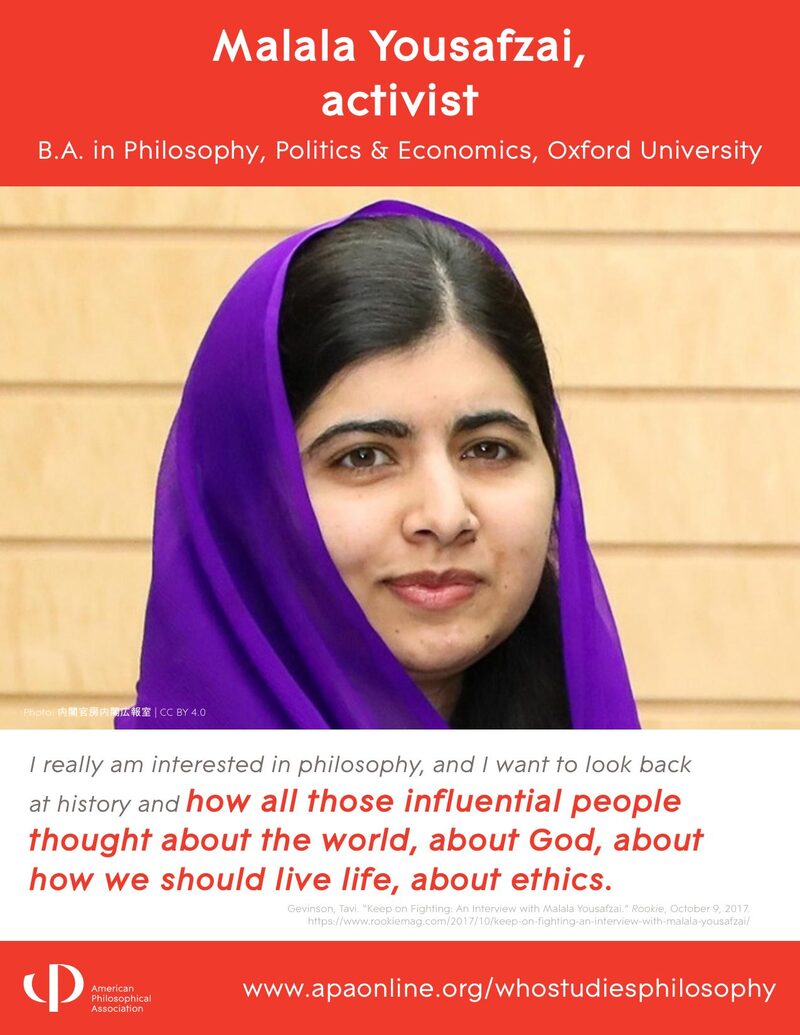
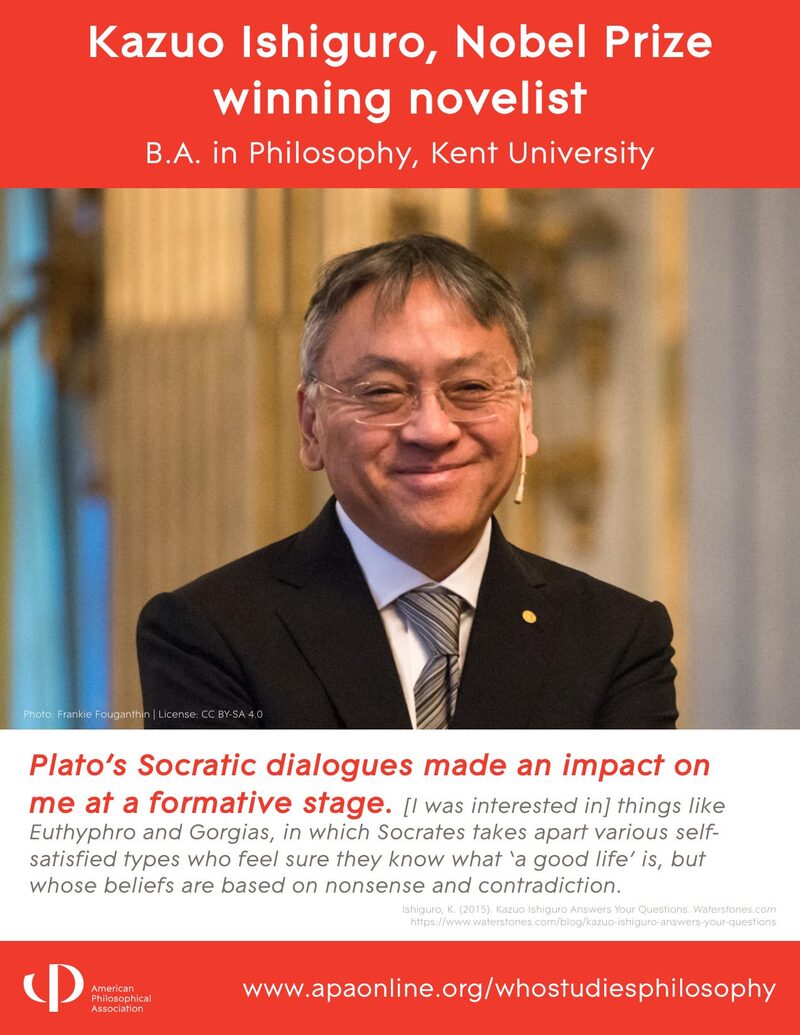
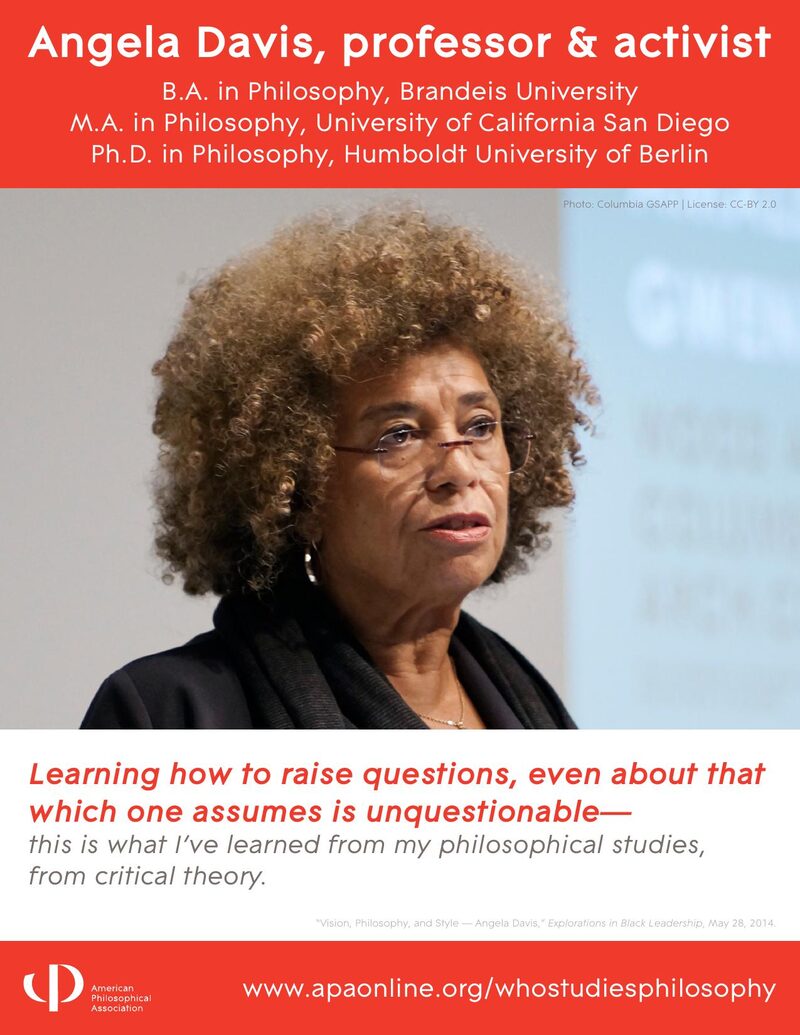
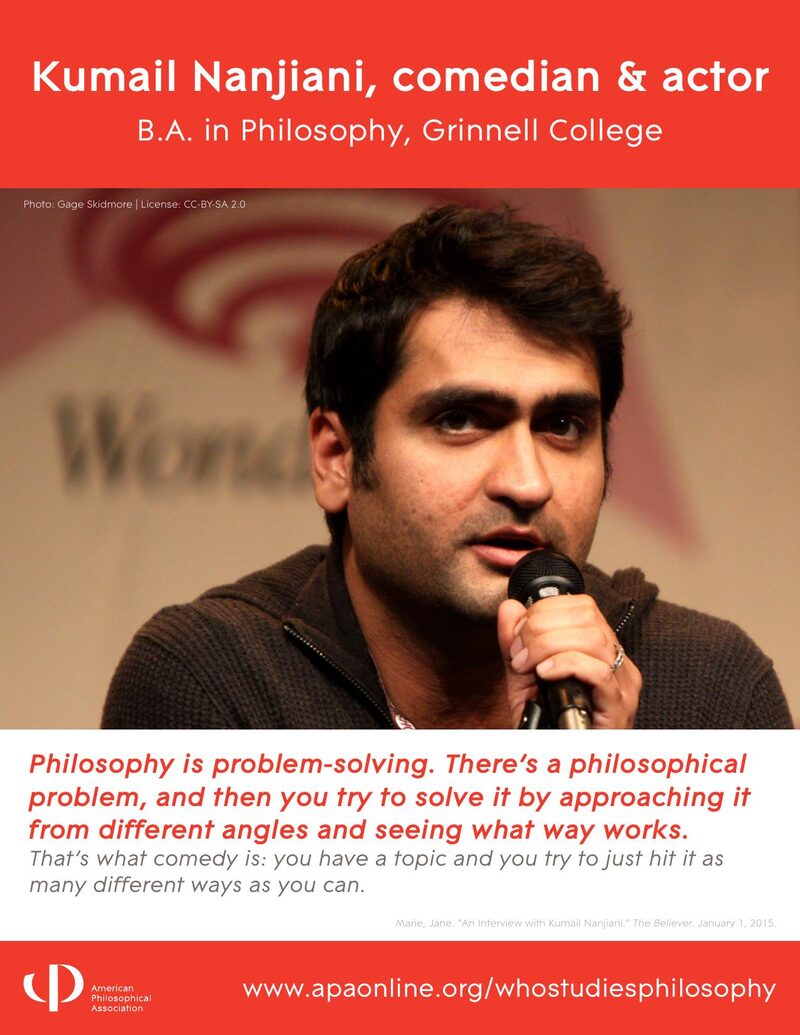
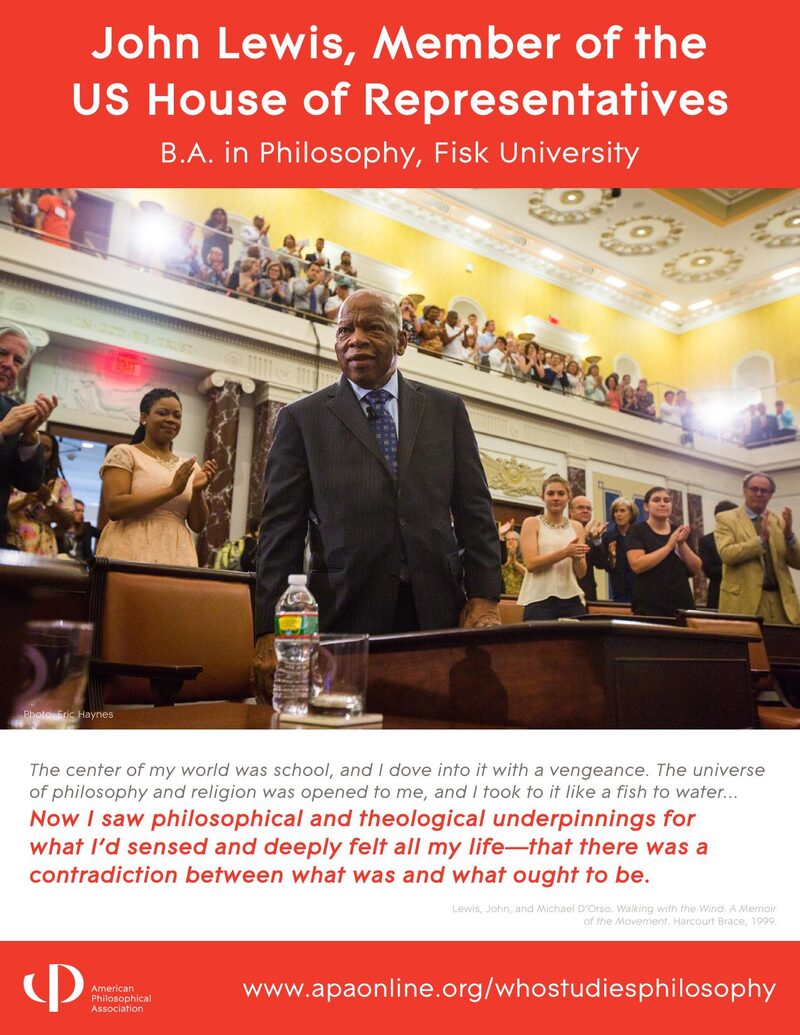
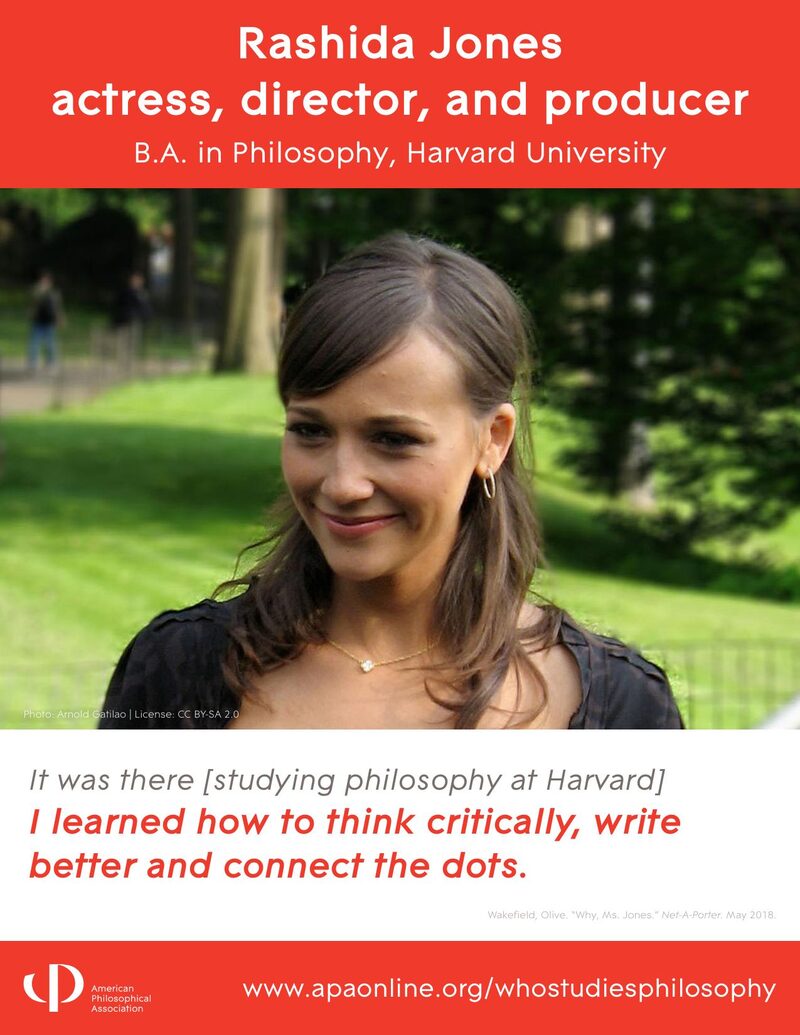
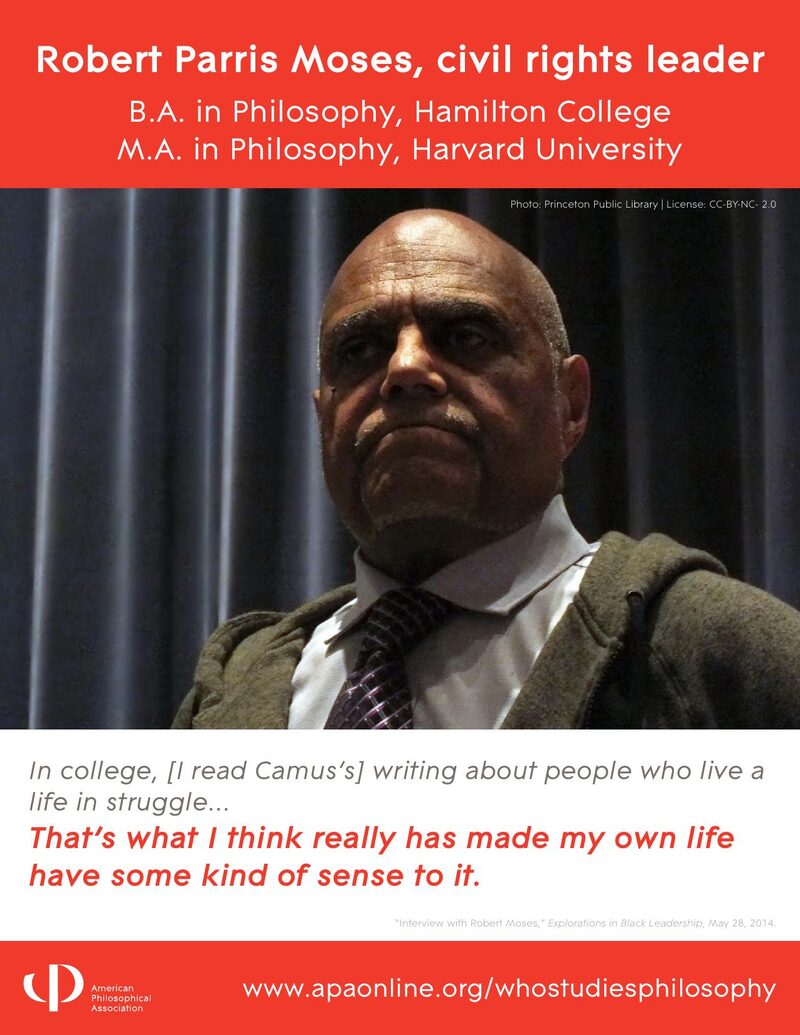
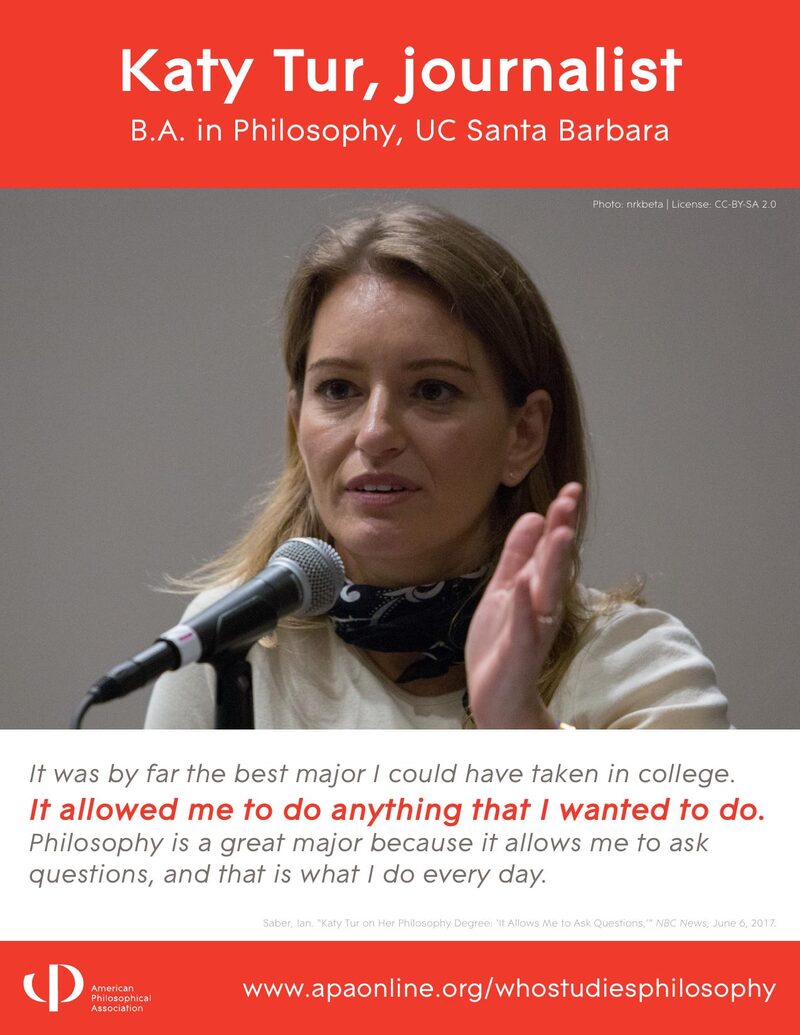
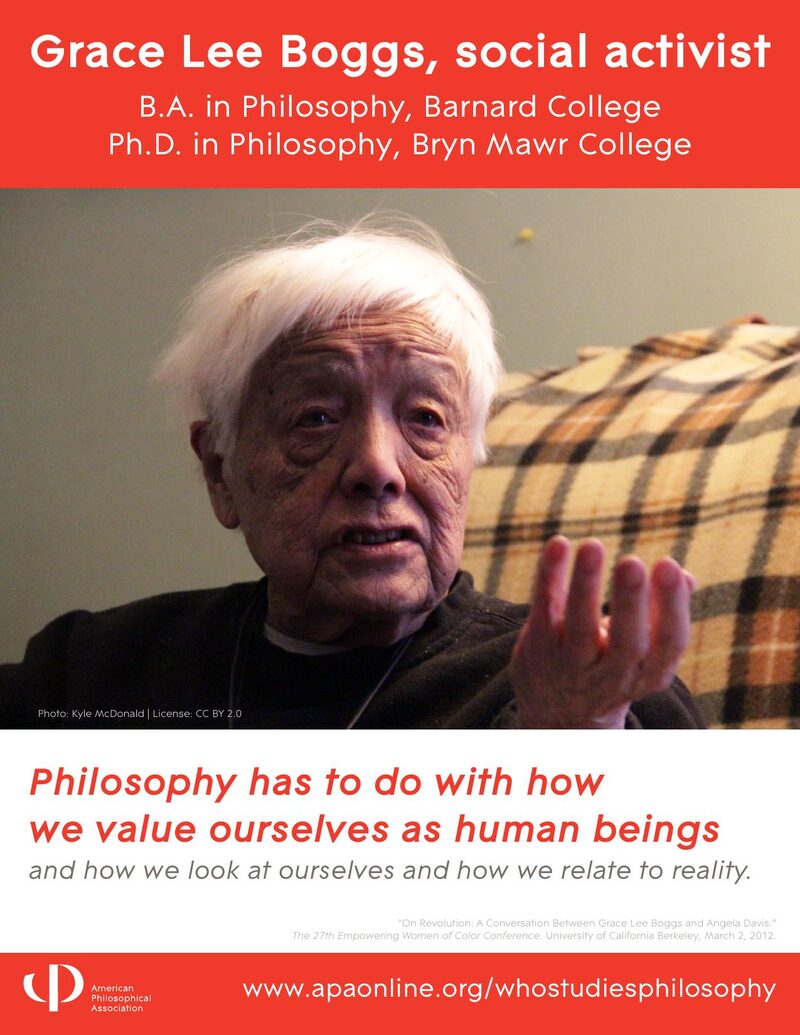
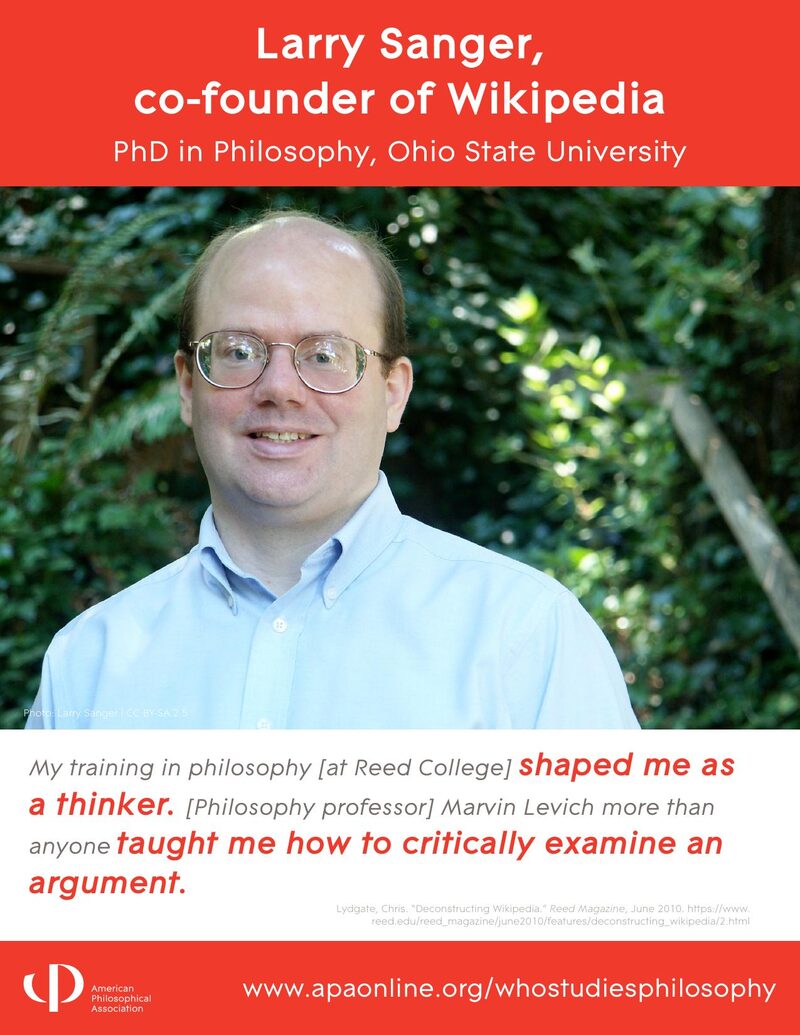
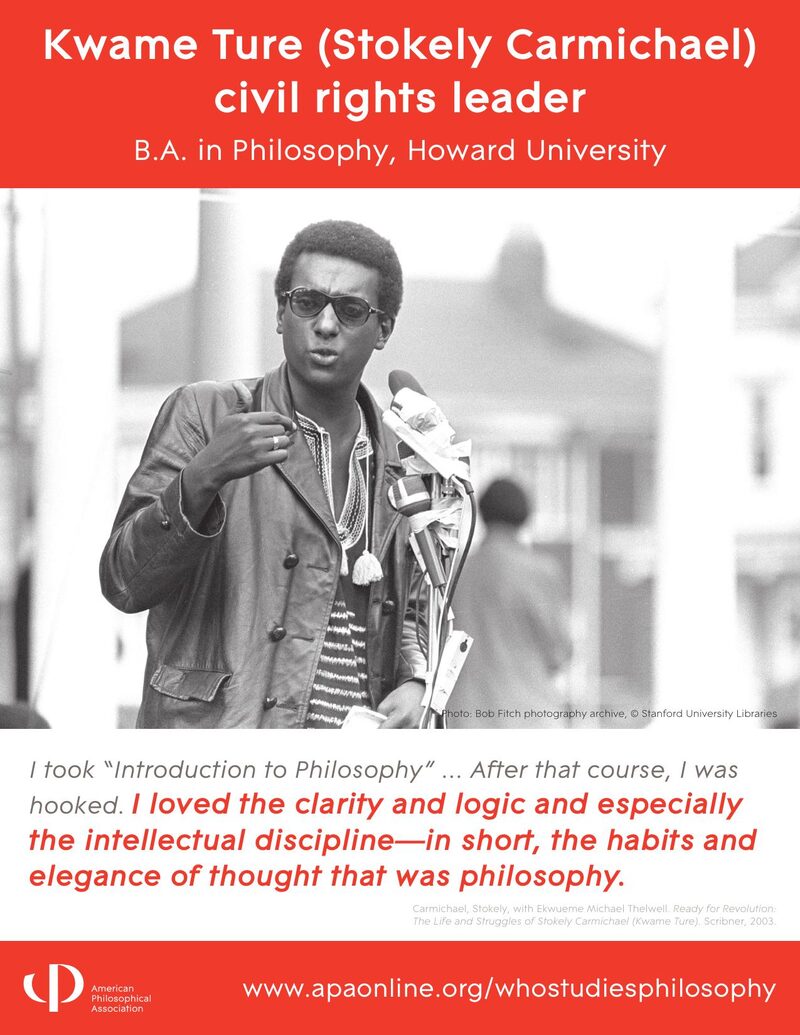
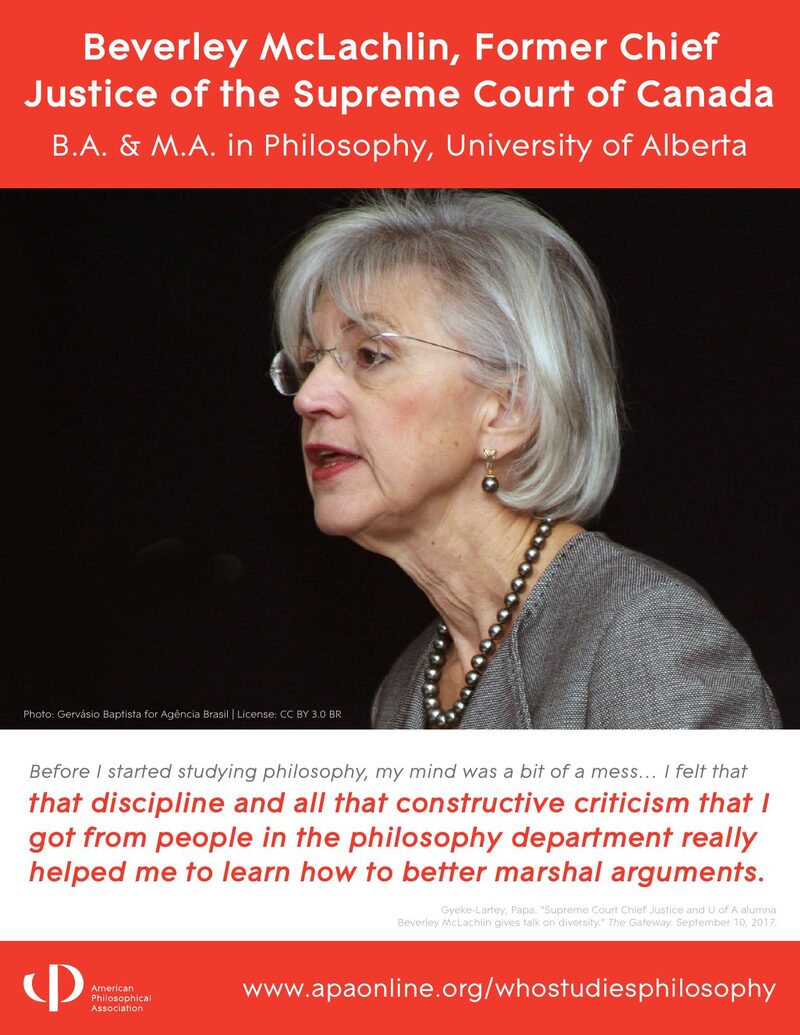
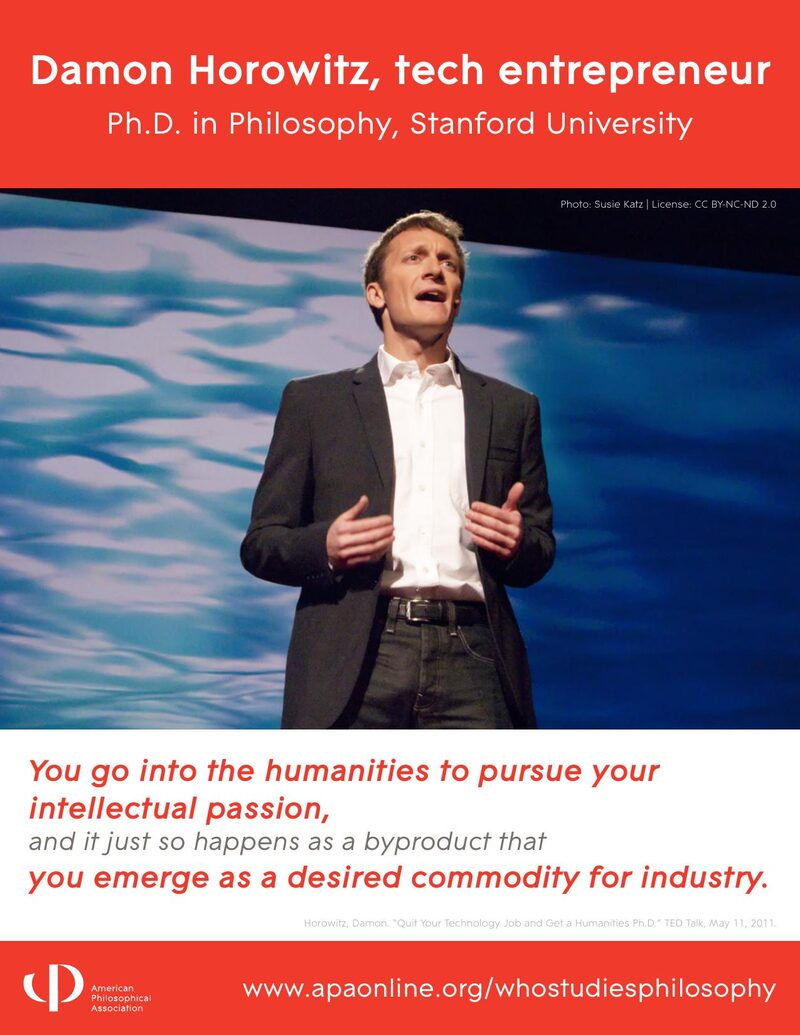
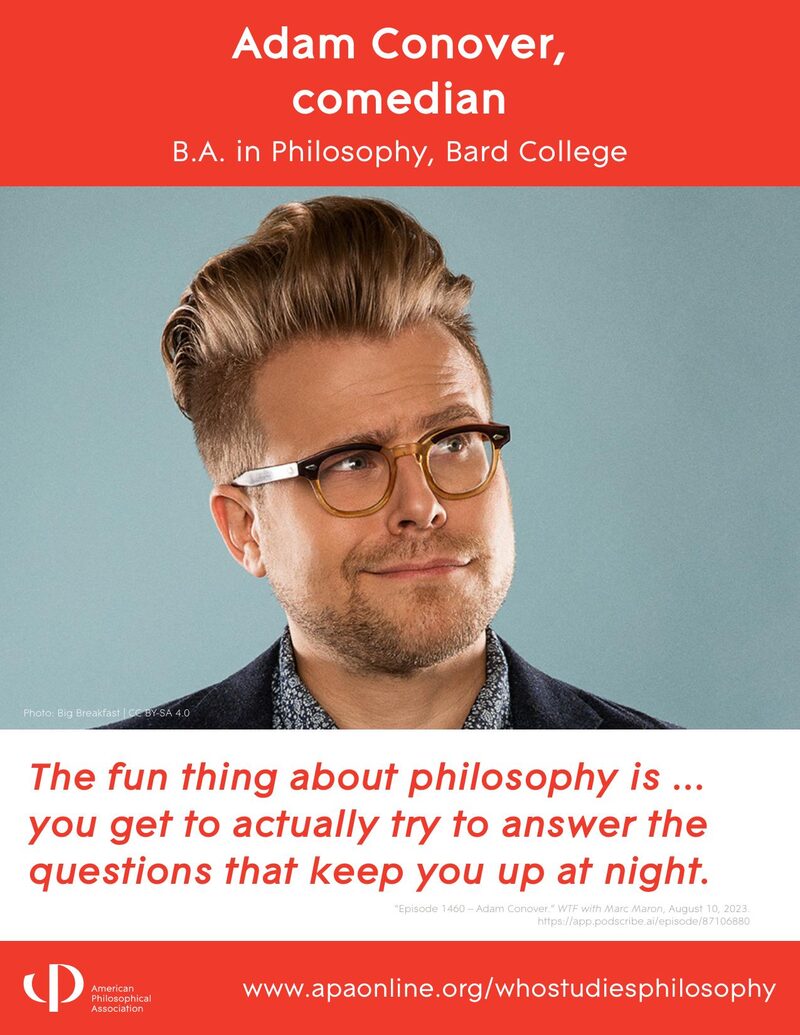
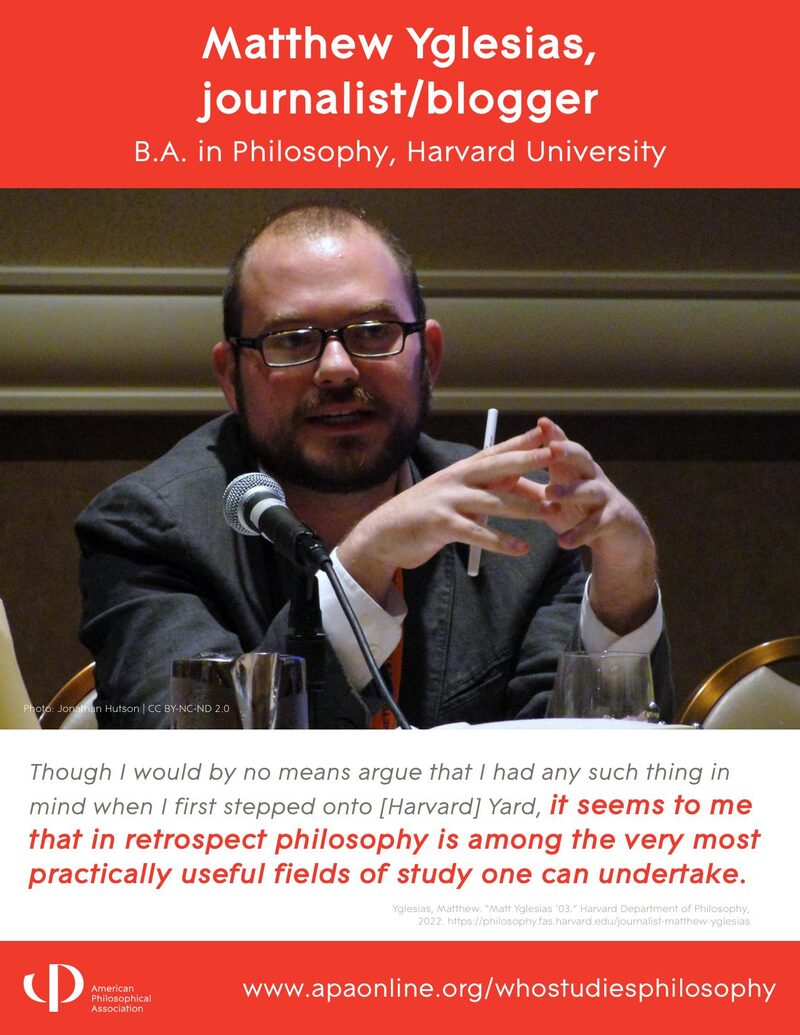
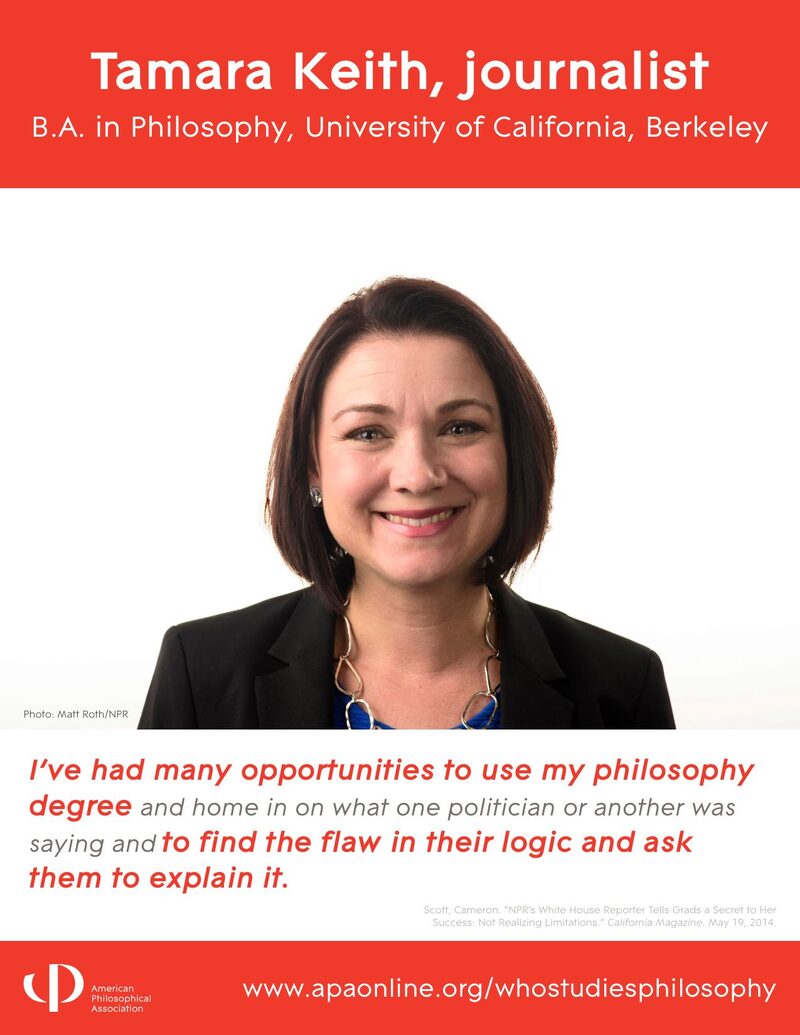
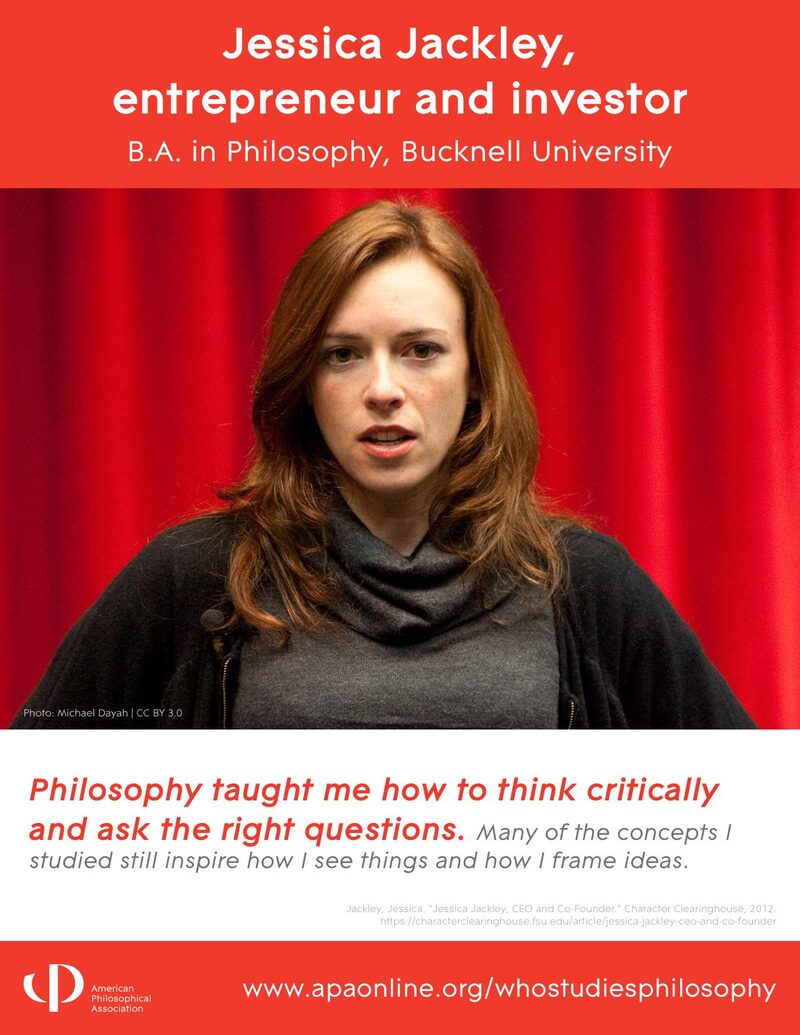
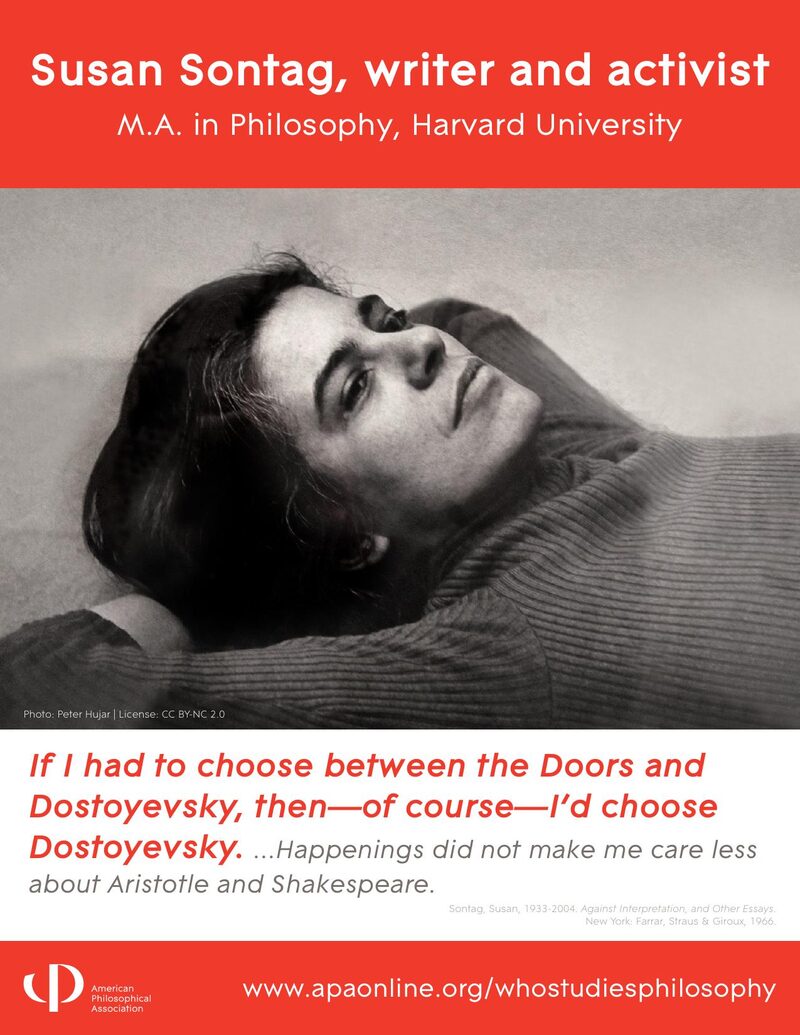
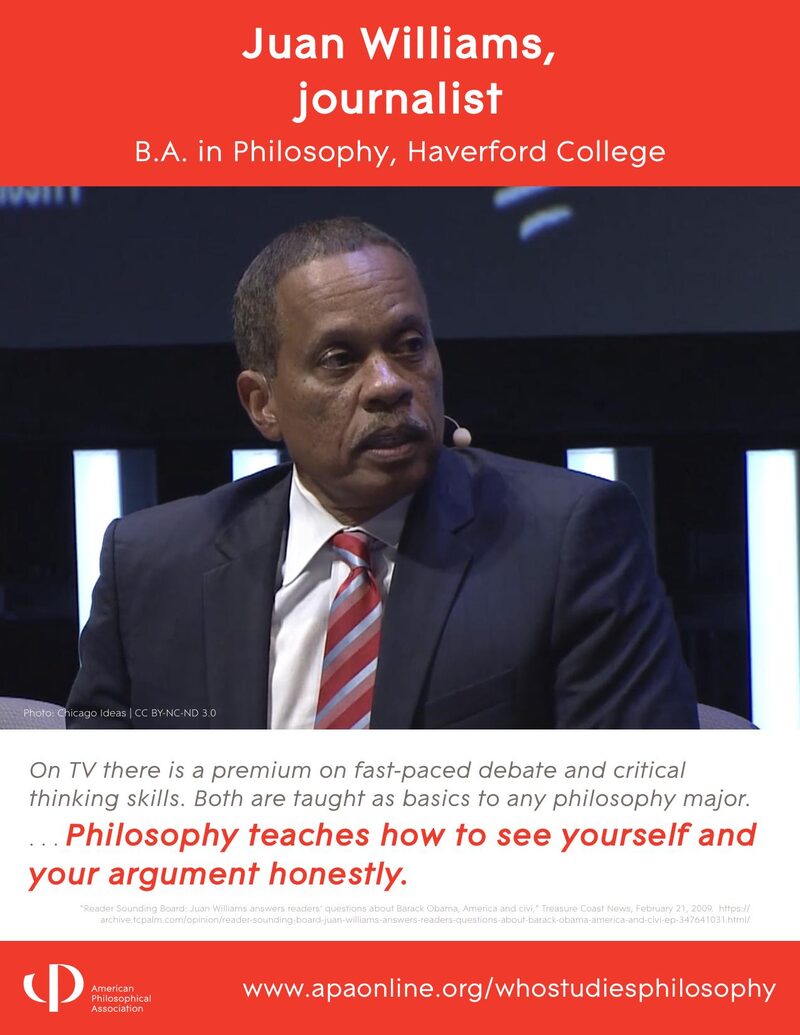
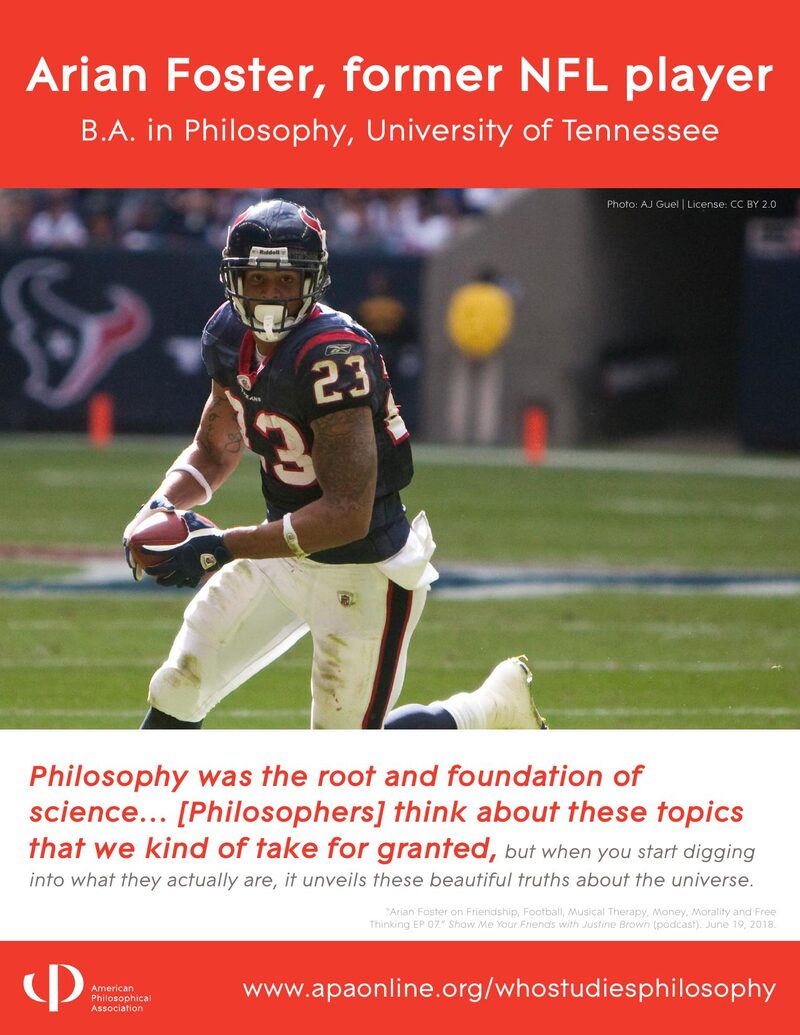
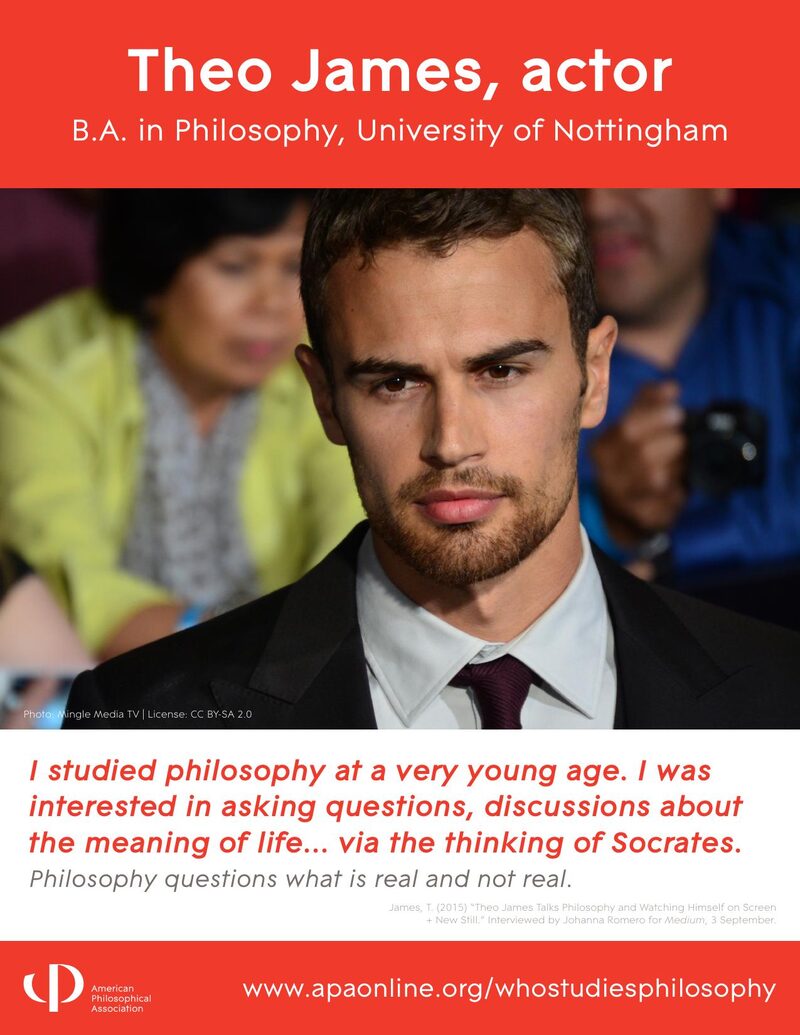
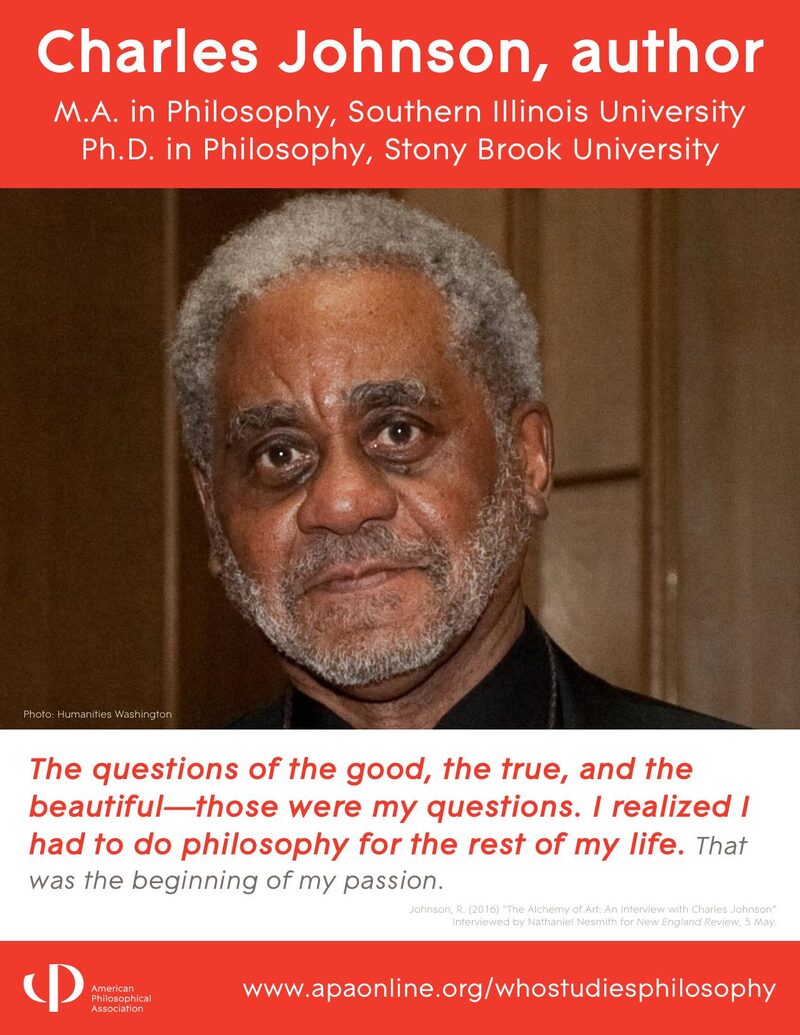
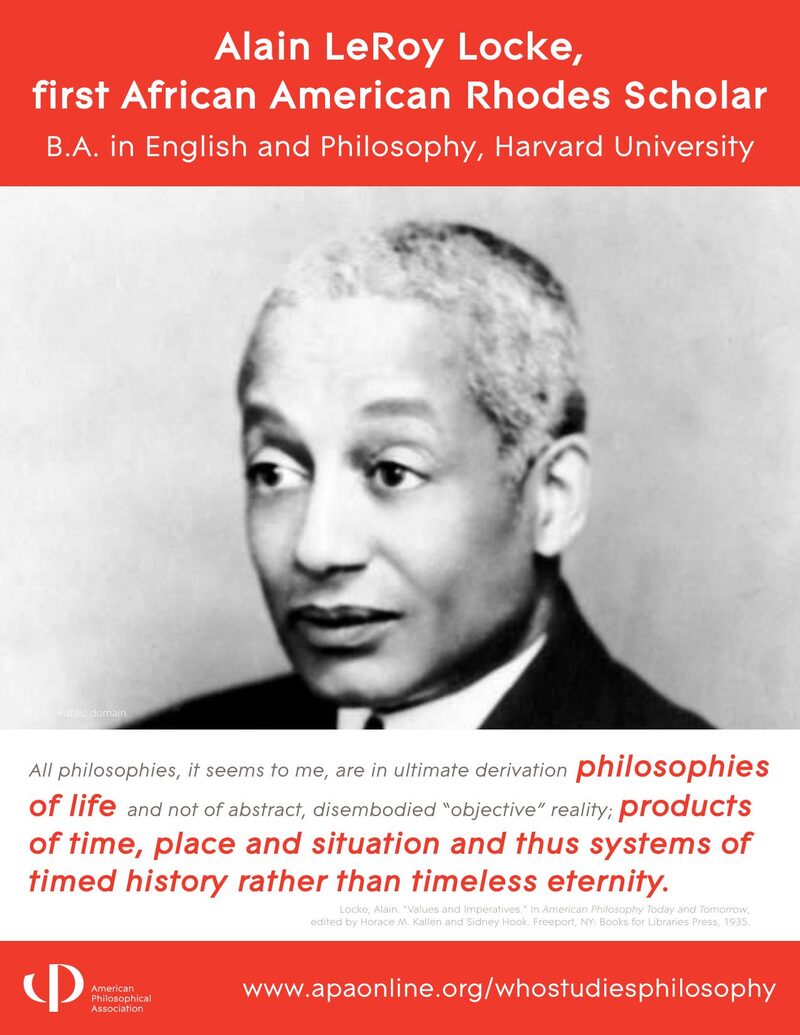
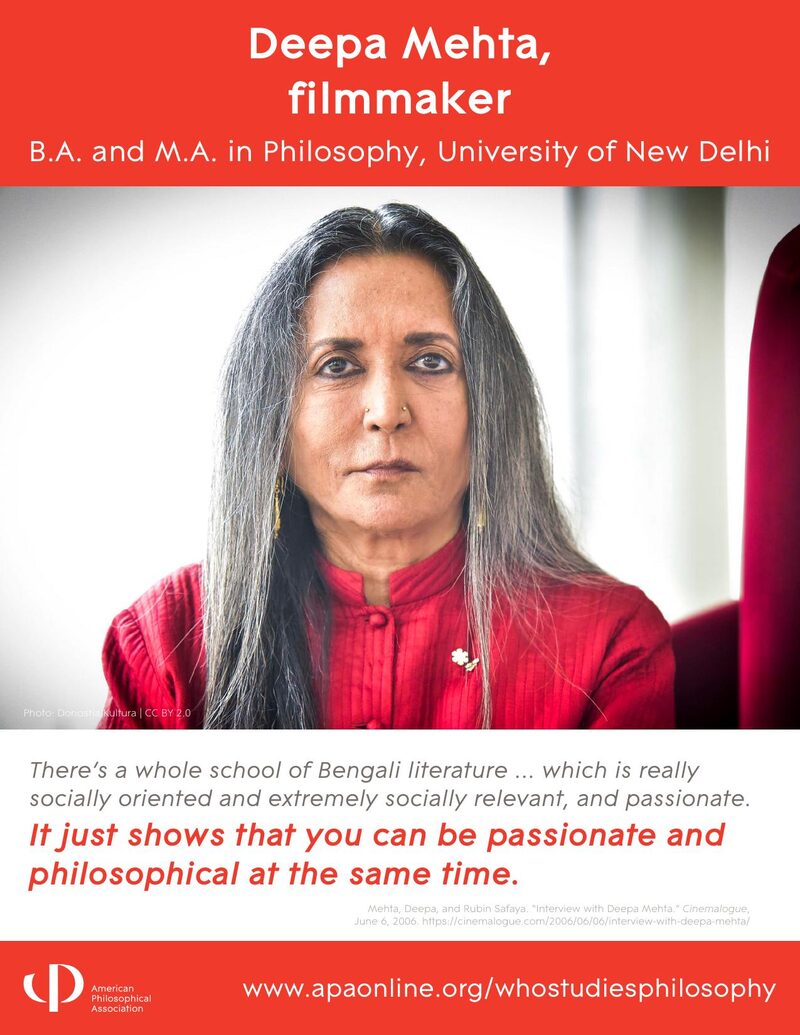
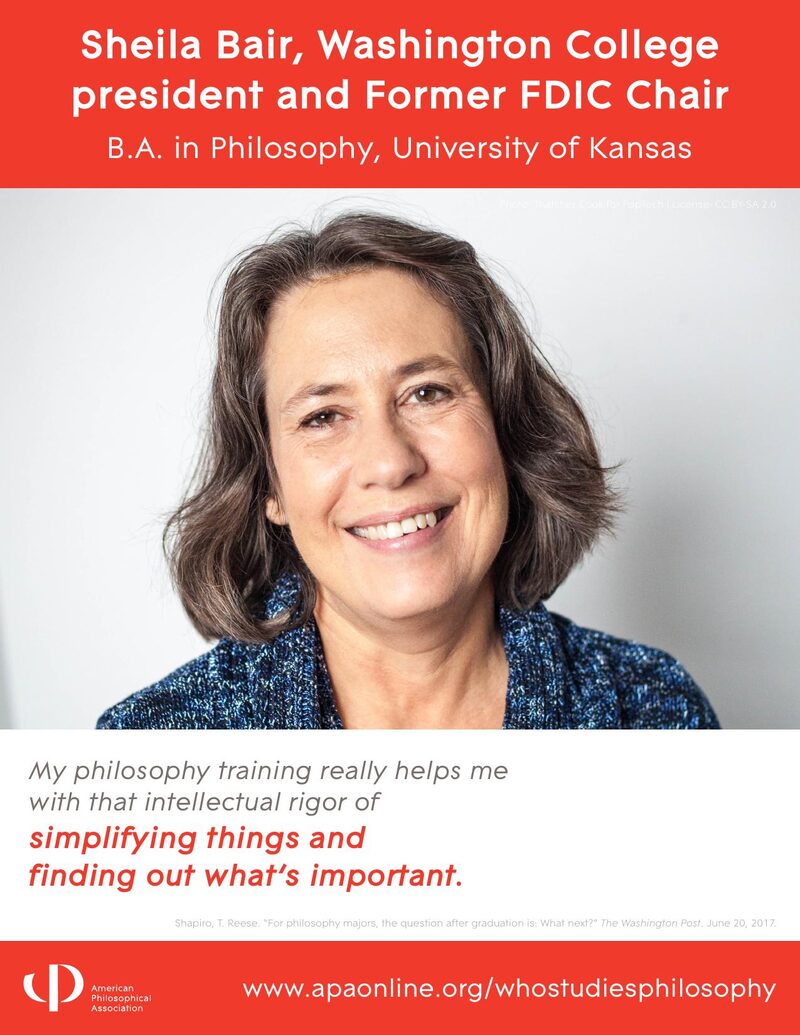
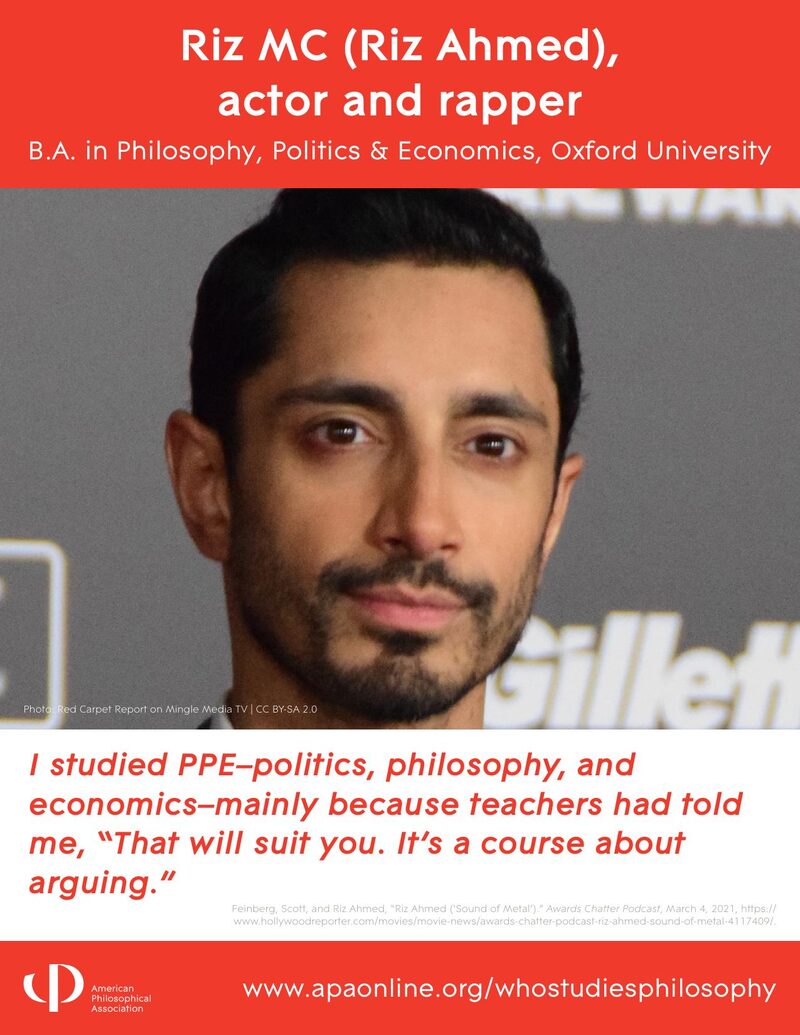
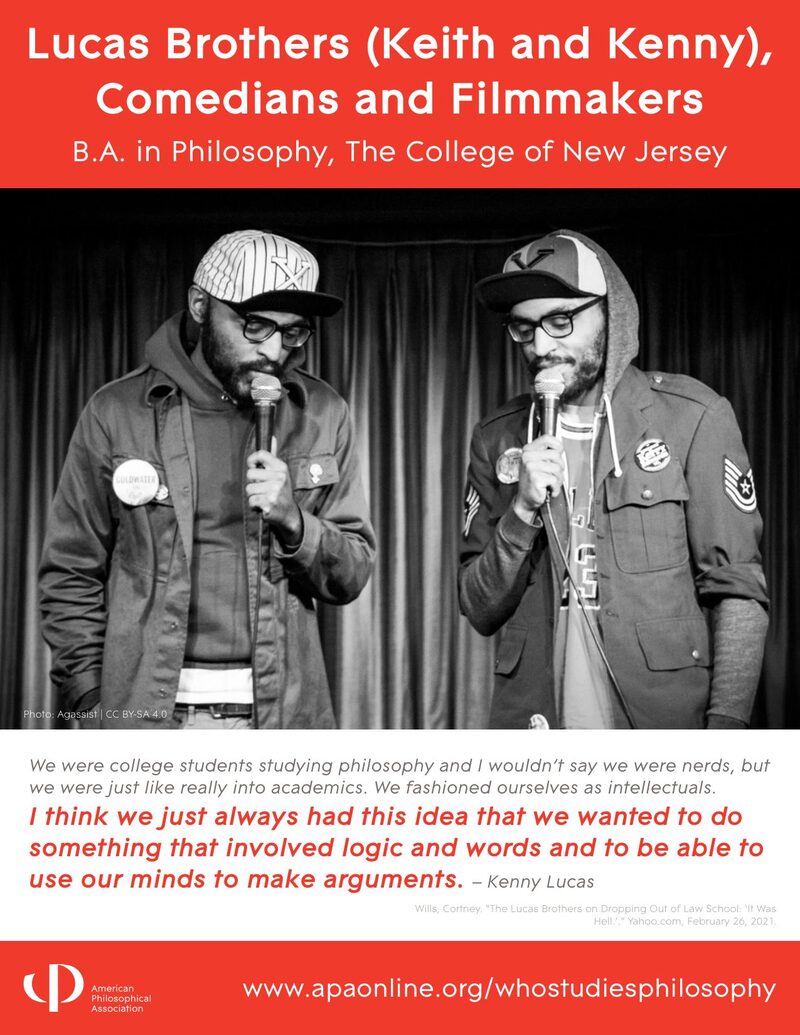
Public figures have taken their philosophical training in many directions
From the American Philosophical Association's "Who Studies Philosophy" poster series.


How philosophy prepares you for work outside academia
We asked philosophers working in non-academic fields what actually carried over. Click the links to see more interviews.
Jarvis left academic philosophy for an MBA and now works in business analytics. He says his philosophy training didn't teach him the technical material directly, but it made him a more flexible, rigorous thinker, which showed up in unexpected places: evaluating whether a merger should go forward, structuring optimization problems, even recognizing logical tools like truth tables that philosophers had been using long before computer science existed.
Read the full interview at Free Range Philosophers →Pines went from a philosophy PhD to a JD to a career as a public defender. He credits his philosophy training with building the endurance for sustained, demanding intellectual work, a well-developed intellectual humility from years of being on the losing side of arguments and a capacity for rigorous analysis without losing emotional composure, all of which, he says, mattered directly in the courtroom.
Read the full interview at Free Range Philosophers →How do I translate the value of my degree for employers? The department will help
A marketing job posting can list "proficient in Google Analytics" as a line an applicant tracking system can search for. Nobody writes "proficient in weighing the strongest version of an opposing argument" into a job ad, even though that is exactly the kind of thinking a philosophy or religious studies degree builds. That gap, between what you can actually do and what a hiring manager knows how to search for, is the real translation problem, and it's one employers say they feel too.
A 2026 report from the Society for Human Resource Management found most HR professionals are struggling to fill open roles right now, and the shortage isn't in technical skills. It's in what the report calls "power skills": judgment, communication, complex problem solving and decision-making under uncertainty.
A separate national employer survey conducted for the Association of American Colleges and Universities found the same pattern back in 2021: of every skill measured, the single biggest gap between what employers wanted and how prepared new graduates actually were was critical thinking.
Our own faculty hear a version of this directly from local employers, in less formal terms: the hard part is finding people who can isolate what actually matters in a pile of information, hold two sides of an argument in mind long enough to argue fairly, explain their reasoning so someone else can follow it, work inside a team and take criticism without shutting down. Those aren't soft extras. They're what this major trains in every class.
Three workshops a year address the translation challenge
Transfer applications
Walking through the personal statement, application timeline and what CSU and UC reviewers actually look for from a philosophy or religious studies applicant.
Writing a CV that translates
Turning coursework, papers and class discussion into language a hiring manager recognizes, with real before-and-after examples of resume lines.
Choosing your courses
Held early in the year, before you build your schedule, so your path through the major lines up with where you're headed, whether that's transfer, law school or a job right after.
Open to majors and non-majors. Watch your email and Instagram each semester for dates.
What philosophy gives you that a paycheck can't
Not every outcome shows up on a pay stub. UNESCO has made the case that philosophy's value runs deeper than career preparation.
UNESCO's landmark study on the field, dedicated to those who defended philosophy education "as a fertile guarantor of liberty and autonomy," names philosophy a genuine "school of freedom," a discipline UNESCO has built an entire international day around because of how directly it trains the capacity to think for yourself. Source: UNESCO, "Philosophy, a School of Freedom" (2007): read the full report
The report recommended expanding philosophy education from preschool through university and weaving it into other disciplines rather than isolating it, arguing that this kind of thinking is a foundation for engaged citizenship, not a luxury reserved for a few.
Philosophy prepares you to wrestle with life's inevitable questions.
"A marvellous indication of man's innate disposition to philosophy is to be found in the questions asked by children. It is not uncommon to hear from the mouths of children words which penetrate to the very depths of philosophy. A few examples:
A child cries out in wonderment, "I keep trying to think that I am somebody else, but I'm always myself." This boy has touched on one of the universal sources of certainty, awareness of being through awareness of self. He is perplexed at the mystery of his I, this mystery that can be apprehended through nothing else. Questioningly, he stands before this ultimate reality.
Another boy hears the story of the Creation: In the beginning God made heaven and earth . . . and immediately asks, "What was before the beginning?" This child has sensed that there is no end to questioning, that there is no stopping place for the mind, that no conclusive answer is possible.
A little girl out walking in the woods with her father listens to his stories about the elves that dance in the clearings at night . . . "But there are no elves . . ." Her father shifts over to realities, describes the motion of the sun, discusses the question of whether it is the sun or the earth that revolves, and explains the reasons for supposing that the earth is round and rotates on its axis . . . "Oh, that isn't so," says the little girl and stamps her foot. "The earth stands still. I only believe what I see." "Then," says her father, "you don't believe in God, you can't see Him either." The little girl is puzzled for a moment, but then says with great assurance, "If there weren't any God, we wouldn't be here at all." This child was seized with the wonder of existence: things do not exist through themselves. And she understood that there is a difference between questions bearing on particular objects in the world and those bearing on our existence as a whole.
Another little girl is climbing the stairs on her way to visit her aunt. She begins to reflect on how everything changes, flows, passes, as though it had never been. "But there must be something that always stays the same . . . I'm climbing these stairs on my way to see my aunt — that's something I'll never forget." Wonderment and terror at the universal transience of things here seek a forlorn evasion."
Karl Jaspers, Way to Wisdom (Yale University Press, 2003), pgs. 9–10.Academic careers
If you want to pursue a career teaching or researching philosophy, you'll need to earn a graduate degree. Many master's and doctoral programs in philosophy waive tuition and pay a stipend to the students they accept. Contact a professor to talk about your interests in academia, and we'll give you tailored guidance.
Talk to a professor about planning this pathReady to see where you'd start?
Every path above starts with the same first step.